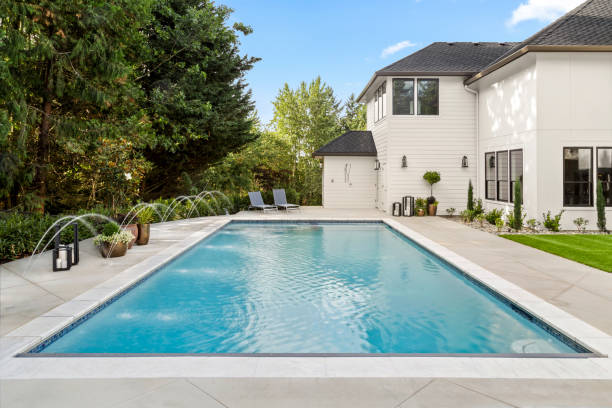
Determining the ideal depth of your pool depends on how your family intends to use the water for recreation and exercise. There is no one-size-fits-all answer, as diving, lounging, and lap swimming all require different water levels. A professional pool construction company will guide you through these choices to ensure your pool is safe, functional, and enjoyable for all ages.
Safety Standards with a Pool Construction Company
Standard residential pools often feature a shallow end of three feet and a deep end of five to six feet. This configuration is ideal for social gatherings where people want to stand and talk while staying cool. If you plan to install a diving board, a much deeper section of at least eight to nine feet is required by safety codes to prevent injuries during use.
Functional Swimming Pool Construction Designed Around a Property’s Layout
Modern swimming pool construction designed around a property’s layout often utilizes "constant depth" or "sports pool" designs. These pools are usually around four to five feet deep across the entire length, which is perfect for water volleyball or lap swimming. This design maximizes the usable area of the pool, as there are no "dead zones" that are too deep for standing or too shallow for swimming.
Depth Considerations in Spa Construction
In contrast to the main pool, spa construction focuses on a seated depth that typically ranges between thirty and thirty-six inches. This allows adults to sit comfortably with the water reaching their shoulders while keeping their heads well above the surface. Bench heights are often tiered within the spa to accommodate users of different heights, ensuring that everyone can find a comfortable and relaxing spot.
Maintaining Depth with Pool Automation Systems
Keeping water levels consistent is vital for maintaining the intended depth and ensuring the filtration system works correctly. Advanced pool automation systems include "auto-fill" features that detect when water has evaporated and add just enough to maintain the perfect level. This prevents the pump from drawing air and ensures that your deep end remains at the specific depth required for safe diving.
Consistency through Pool Heater Installation
Deep pools naturally take longer to heat because they contain a significantly larger volume of water that absorbs more thermal energy. When planning for pool heater installation, your builder must account for this depth to ensure the heater has enough power to reach the desired temperature. Properly circulated warm water ensures that even the deepest parts of the pool feel comfortable and inviting for evening swims.
Safety Markings and Pool Deck Resurfacing
The transition between shallow and deep water should be clearly marked with tiles or transition lines on the pool floor. During pool deck resurfacing, builders also ensure that depth markers are clearly visible on the perimeter to inform swimmers of the water level. These practical upgrades improve comfort and long-term durability while ensuring the safety of children and guests who may not be familiar with the pool's layout.
Conclusion
Choosing the right depth is a balance between your recreational goals and safety requirements for your family and guests. Whether you want a deep diving well or a shallow social pool, professional planning ensures the result meets your needs. By combining thoughtful design with durable materials, you create a backyard retreat that provides a safe and functional environment for everyone to enjoy.